Today I put my Mason and Leaf Cutter Bee larvae. I put the tubes in a box in the fall and keep them with my Dahlia tubers because their wintering requirements are similar. I finally ordered new bamboo tubes which I placed in the bottom of the box. Then I placed a piece of corrugated on top of them to divide the new ones from the old ones. After a length of time when I feel that everything that will hatch has hatched out, I will remove and set aside the old tubes from the top and add more new nesting tubes.
Showing posts with label Bees. Show all posts
Saturday, April 11, 2026
My Solitary Bees Have Been Put Out
I transplanted my indeterminate tomato seedlings. They were sown ten days ago on April 1st and were just starting to show their first leaves.
When I checked the tray for water I noticed that one variety, my Amish friend Elsie's Tomatoes, which are very vigorous plants their whole lives, was sending roots through the drain holes. They were ready to be out of their baby cell.
They never look like much the first day, but give them three or four days and they will be off and running. When they are sending out their first leaves they are in a growth spurt and now they have plenty of room to root. Tomato plants respond very well to transplanting. In my opinion, it is better to bump them up gradually from small cells to small pots, then maybe a larger pot before they go out to the garden. I have heard it is true in house plants and am coming to believe it is also true for vegetable plants. They do not like their container size to change drastically. They would rather the stages were more gradual. If I had planted these babies in, let's say 6" wide pots, they would shock and stall their growth. Because Tomato plants send out little roots along the stem, they can be submerged quite deeply and they will send out more roots along the stem.
I have room in this tray for two more 6 packs. I plan to use these for Marigolds or maybe Lettuce. I have a difficult time discarding extra seedlings, so I left some in the seed tray under the light just in case one of the others doesn't thrive. The Dwarf Eagle Smiley plant was transplanted too. He has a buddy. A second seed (on the left) germinated in a much quicker and less dramatic fashion.
In other News...
I use this blog all of the time to figure out when something happened. Today will be known as "the day Big Bird flew through the neighbor's upstairs window."
I was in the house sort of napping when I heard what sounded like a van door slamming shut. You know, that sliding track sound that comes with UPS and some Amazon trucks.... 1980s minivans... wwrrrroooooshhhCRASH.
I noted it as being very loud and unusual, but we live close to a busy intersection and if I went out and investigated every weird sound I'd neve get any rest. About 20 minutes later our next door neighbor called in a fairly high state of agitation. She wanted us to come over and "have a look at the upstairs window. It's shattered all over the driveway." We knew her husband was away for the day but the situation wasn't making much sense over the phone and to be fair, it wasn't making much sense to her either.
The upstairs attic window was shattered. Below is a photo of the house from back when my husband lived there. We went over there and surenuf, there was glass on the driveway and the window pane was gone. She said she had heard a whooshcrash and thought maybe we had cut down a tree nearby. But it didn't sound right so she looked around the house inside and out. That was when she saw the glass. We went up in the attic expecting to find a dead bird up there. There was a lot more glass in the attic, a few drops of blood on the floor right below the window and a dozen or so big, black, breast feathers blowing around.
We cleaned up the mess. We took pictures with her phone for her insurance agent. My husband screwed a piece of plywood over the window. It was a double pane insulated window and there was nothing left of it. Glass was scattered across the attic in a twelve foot arc and I even picked one shard of it out of a rafter. But no sign of a bird. It had to be a BIG bird. There are only a few Christmas decorations in the attic and we panned a flashlight into every corner. There was no more blood or bird.
The feathers were black and wide with a metallic band. They looked sort of like turkey feathers. Google Image agreed. The first thing Google came up with was wild turkey too. But what the heck would a turkey be doing way up there? I could imagine that maybe a turkey vulture, which are common here, dove after a song bird that was scoping out the widow and flood light for a nesting spot. But even that seemed a little far fetched.
Later on, I was outside working on my bee nesting house and the neighbor's husband called me over. They had gone back over their security camera footage and they believed they had a picture of the culprit. The camera view didn't go up as high as the attic window, but it did catch a reflection in one of the lower windows of something standing in the driveway along the fence.
That there is a big ole wild turkey. With a beard.
What the hell was he thinking?
We walked around the driveway again looking for blood or feathers and didn't find a thing. Apparently Big Bird made it out alive. That's one lucky bird. And I think we were lucky too. No one needs a big, bloody turkey dying in their attic. It was nice to have photo evidence as an explanation. Quite frankly, I don't think the insurance agent would have believed the story without it. I mean how often does some one tell you "A wild turkey flew through my attic window and then disappeared."
Thursday, March 13, 2025
Crocuses
I spent some time today dividing and transplanting ornamental grasses and doing some cleaning up. Crocus flowers only open up on sunny days. So far the repellent granules are keeping the deer and rabbits from snacking on them which is making the honey bees very happy. There are precious few flowers for the bees this time of year.
Yesterday I saw my first flock of migrating robins and I can hear the red-winged blackbirds.
Saturday, June 29, 2024
Acceptable Level of Damage
For generations, gardeners and farmers have been talking about the "acceptable level of damage". How much are you willing to share with the pests? There is even a rhyme.
One for the mouse, one for the crow, one to rot, one to grow
Few of us would mind losing a tomato, or even a few ears of corn here and there. But Nature has no self control and deer, racoons, squirrels even insects, will destroy an entire plant or crop with no thought for the future or sharing. It always seemed stupid to me that Asparagus Beetles would work on an Asparagus patch year after year until they killed every last plant thus eliminating their own habitat. I guess they are a bit like humans in that respect.
Yesterday morning when I came out the door the first thing I saw was some mulch disturbance. Someone either stepped in the net or got a mouthful and pulled up the staple. They moved on and the daylilies were safe!
Around the corner I saw hoofprints in the mulch edge and found that some of the Hosta and Coral Bells were trimmed. The plants were also sprayed so they did not eat them all. I went ahead and trimmed the rest of them off. I enjoy the foliage more than the flowers on these anyway.
I took some time to clean up the wild daylilies (Tiger Lilies) along the front fence. The deer got to these the end of May before I even started spraying. Usually they don't want the hard, new buds and wait until they are plump and ready to open. The early stems had time to dry all the way to the base which makes it possible to pull them out easily instead of cutting them. There are still mid-season stems in there that are still green.
That's a lot of stems, but the border still looks nice. Just think how nice it would have looked with twice as many blooms.
I ordered some larger covers on Amazon to try for some of my free standing perennials to reduce the number of plants I have to spray. It is nice when the plants are small and I can put the wire cloches over them and not worry about them at all for awhile. These mesh covers are designed like little pup tents.
There are a few plants that they will fit over really slickly, especially the clump of Cheyenne Spirit Echinacea at the corner of the walkway that I pass by dozens of time each day. It is in a vulnerable spot, and it is something that I enjoy very much. Being able to set this cover over it each evening will ensure that I get to enjoy every bloom this season.
![]() |
| Cheyenne Spirit 2023 |
The covers have a front zipper which is meant for you to be able to reach in and harvest from a covered raised bed, but it make is convenient to rearrange taller stems like these Black Eyed Susans. The covers are pinned down with earth staples and stack neatly on top of each other when removed.
![]() |
| One less thing to spray each night. |
Elsewhere in the garden, my cucumbers are blooming. This little leaf cutter bee arrived in a shipment from Crown Bees this week. She spent all day with her face buried in a bloom.
Monday, August 17, 2020
Mid-August
There is still a lot going on in Mid-August and I have stayed on top of watering and cleaning so everything still looks alive and producing.
More than half of the raised beds are still producing and cover crops fill the rest
The Summer Squash bed is still neat and tidy.
But I spotted a spot!
Powdery mildew.
That little round spot dead center in the above photo is the precursor to total annihilation. Not to be confused with leaf silvering shown below. I see that a lot on the Facebook forums. New gardeners on the lookout for potential problems often misdiagnose the silvering (below) as mildew. It actually seems to be some sort of mildew protection. Varieties with leaf silvering seem much more resistant than those with tender green leaves. So I got out my Safer Grow Mildew Cure. I tried this last year at the first sign of mildew and it really seemed to stop the progression.
This is going to be a good year for apples. I currently have 71 on one tree and about 15 on the other. And these are 13 to 16 ounce apples! A little goes a long way. Every time one falls I have a pang of disappointment. Then I ask myself - "what would you do with a hundred pounds of apples?"
I am currently shopping for a dehydrator because there will be more than I need for pies and sauce. But I do love dried apples.
The strawberries I planted this spring are growing well. About every two weeks I have to get in there and cut the runners. I have let some babies take hold to fill in for wimpy plants.
The sweet potato vine... well, it has left the garden.
Dinner Plate Dahlias are beginning to bloom. I've sort of neglected them this year. They are on the slope where they are difficult to water, so they are just in a holding pattern this year to keep them alive and next year I will put them in fertile ground and add to them.
My clematis vines, while beautiful in June, always end up getting over grown and mildewed. So I cut them to the ground and in a few weeks they are back and much more manageable. At this point I can begin training them up their trellis in an organized fashion and these branches will be the basis for next spring's growth.
Potato pots are so ugly in August! I've been cutting them back and then moving them to the shade on the north side of the garden shed so they don't continue to bake on the hot gravel. They look like a pile of Christmas presents waiting to be opened. You sort of know what might be in them but you never know until you actually dump them out.
Tomato season has only just begun. I have so many nice fruit waiting to ripen.
Brussels Sprouts are sprouting. This is my first time growing them so I am learning how best to prune them to give a good harvest.
Butterfly Bush
Buckwheat flowers
There are a lot of busy little bees on the buckwheat
Sweet Corn Time! Our farm stands have had corn for a month but it doesn't taste like this!
Now we just need rain. We haven't had a drop since the 3rd. That's a two week total dry spell in hot sunny weather. My tank is almost out of water again and I've begun emptying containers of nasturtium and eggplants because I can't keep them watered. The water priorities are tomatoes, sweet potatoes, corn and beans and not only does it use up the water, but it takes a lot of time to go around with the hose and/or cans and get to everything that needs it.
Labels:
Apple Trees,
August,
Bees,
Flowers,
Harvest,
Preserving,
Squash,
Strawberries,
Sweet Corn,
Tomatoes
Monday, July 29, 2019
A Landscape Project
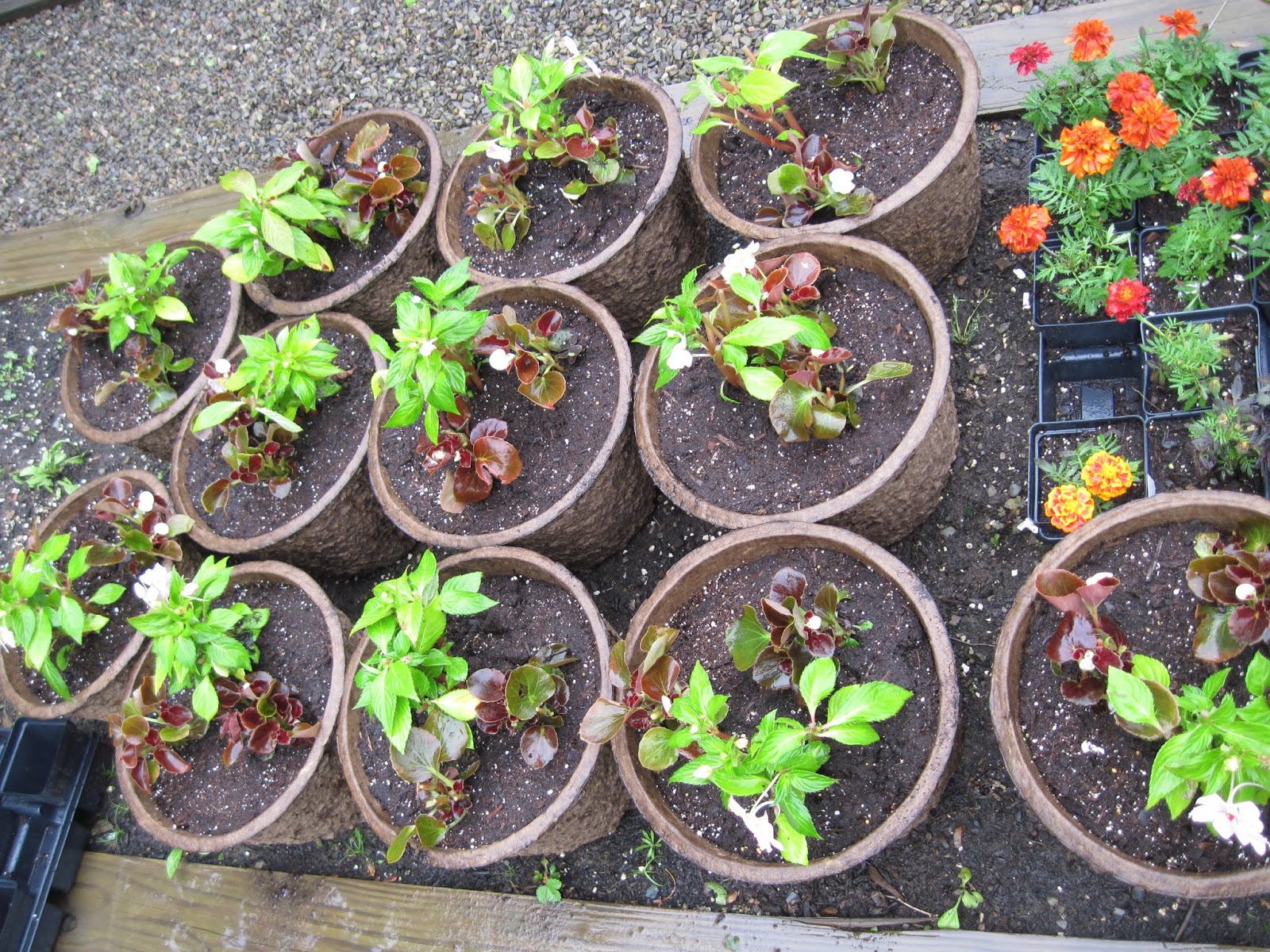
When I planted the dry creek bed a few years ago, I got the idea to plant the plants into large fiber pots and then dig the fiber pots into the ground. This has worked out perfectly. Some of the pots are already beginning to break down. All of the plants are doing well. If I want to replace a plant (I've juggled a few around and replaced annual varieties with perennials) I can usually just pull the entire root ball out of the pot and plop it into a different one.
This project requires twice as many plants. The basis is ornamental grasses, and I also have some shrubs in mind. Right now I am taking advantage of half off sales at the local nurseries. Last Friday afternoon I loaded thirty gallon sized grasses into the back seat of my car and then the next morning we went back with the SUV and loaded six two gallon sized grasses.
I brought my potting bench into the garden and staged all of my pots and potting mix, and after several hours of potting I turned 30 potted grasses into... 30 larger potted grasses. I like to have them in the garden for a week or so where they are easy to water and any loose soil that overflows just goes into the empty bed. This next weekend I will begin toting them around and working on my layout. Then I have a lot of holes to dig.
And I just took a mental walkabout and made a list of about 20 perennials I already have either potted up tucked in a corner, or out of place in the existing landscape that need to be rounded up and potted up. And that doesn't even included the six daylillies that need to be divided.
In addition to the ornamental grasses, I've picked up about a dozen perennials for starters. The bees and butterflies are really excited about them. In fact a few of them might have ridden over in the car.
That's a lot of planting to do...
Meanwhile, in veggie-world: I had to pull the last of the lettuce which I had left shading the roots of the second planting of cucumbers.
The plants are loaded with cucumbers but I couldn't see them to pick them!
I'm picking about 3-5 cucumbers a day
The second planting of corn is tasseling.
I'm getting good side shoots from the broccoli and as much cauliflower as we can eat.
I cut back the old potato plants. They did not bloom this year. We've eaten a few potatoes but I will leave these in the ground for awhile instead of trying to store them.
The Sunpatien and Begonia pots that I sank into the front landscape are growing well and are on the verge of a ton of blooms. I pruned these back severely when I transplanted them. They have been blooming steady, but not profusely. I can't wait until all of those buds open at once.
Sunday, August 19, 2018
Foggy
Have you ever turned your back on your garden for a day and come back to total disorderliness? What was trim and tidy is suddenly all damp and disheveled?
We've had a quarter inch of rain two mornings in a row, and yesterday, we took all day to go out and play. I had a list of things I needed to get done today and when I did my morning walk through in the damp and fog it looked a little yucky and overwhelming. The buckwheat bed I planned on cutting this weekend was beaten down by the rain and a real mess. There were tomato branches to remove or tie up, and cucumbers to pick. Lettuce to transplant. Marigolds to deadhead. It seemed like a lot.
The later reseeded bed of buckwheat is in full bloom, so I wanted to deal with the other one as it is going to seed. Since that was the biggest ugliest project I did that first.
Before long it was all tidy again. I pulled all of the plants, raked the bed, then chopped the tops back into the bed. I put the tougher bottom stems and little root balls into the compost pile. We'll see if that makes the task of tidying up a bed full of composting buckwheat a little quicker and easier.
The old cucumber vines are still healthy and putting out a fresh batch of blooms. Some bumble bees have turned up and they are working on those.
The old vines are putting out huge straight cucumbers.
The new vines direct sowed the second weekend of July have produced their first cucumber. I picked it today. The vines are vigorous and full of blooms. I just looked up the growing information, and the SV4719CS averages 56 days to maturity. This one did it in under 35 days. Not bad. not bad at all!
Pretty nice looking vines. I'm sort of glad they took so long to start up. I think we will have the longest cucumber season ever.
The old Blue Lake Bush Beans are putting out their second crop.
The new Gold Mine beans are full of flowers now.
The younger Lenny and Gracie heirloom plant is producing like mad.
Wow.
The tomato plants in general are looking a little ragged.
I seeded two flats of lettuce. I am using the strawberry bed for the fall lettuce again. This will let me rest the big 8x8 bed where I usually put them after it's busy pickling cucumber season.
I obviously have a LOT of transplants to deal with. I'm going to put some in 4"x 4" pots for later planting. I am putting some in pots to bring into the cold frame. I've got lettuce everywhere!
To keep the young lettuce cooler in the August weather I'm trying the 50% shade cloth.
The only thing I didn't get to today was wrapping up the dill crop and planting a cover crop in that bed. But when I walked away the garden was again trim and tidy.
"Mooch" the semi-feral neighborhood cat says Hello.
Labels:
August,
Beans,
Bees,
Composting,
Cover Crops,
Cucumbers,
Fall Gardening,
Lettuce,
Succession Planting,
Tomatoes,
Transplanting
Subscribe to:
Posts (Atom)