Showing posts with label Composting. Show all posts

Tuesday, March 10, 2026

Early Spring Chores


It's time to start the spring garden chores.  


I removed the dead leaves from the strawberries as the new growth is coming in.  I gave them a shot of fertilizer.  Then I sprinkled some more pansy seeds in there to fill in the bare spots and compete with the weeds.


There is already a Citrus Mix of orange, yellow and white pansies.  This white plant is blooming already.  The honey bees are out looking for the crocuses.  This time of year I have to juggle my wire cloches around taking them off of lower risk plants and protecting the yummy Crocuses from both deer and rabbits.  I also go around sprinkling Milorganite fertilizer on anything with new growth.  Critters don't like the smell and it helps to get a few more days out of unprotected crocus flowers and protects the new shoots of Hosta as they emerge.


The Snowdrops and Winter Aconite (yellow) are blooming.  Next will be Hyacinths then Daffodils.


Time to empty the compost tube.  We drag it out to the center and lift it off the pile.  This will still need to be turned for a couple of months to finish composting before it is ready to use.  This has accumulated from last June until fall when I started the tall tube.  The tall tube will be added to until the pea plants come out. 


I removed one layer of surrounding netting from the Pear tree to make it easier for me to get in there and spray with dormant oil and copper fungicide.  Everything is pruned, now I just need a dry day without a March wind so I don't end up wearing it.  I will post about the pruning when that is done.


The other thing I have done is to check on the woody stemmed shrubs. About half of them had lower branches break off from the weight of the snow pinning them down.  I trim the ragged edges cleanly and check for any splits that need to be cut back.  Next we will start edging and mulching.  The lawn is firm enough, but the mulch pile is still frozen.


Thursday, September 11, 2025

Putting Raised Beds To Bed

 As we are now most of the way through pulling out vegetable plants, I am also prepping the beds for winter.   About half of them had leaf mulch in them already, but some of the heavy producing beds (Sweet Corn, Beans etc) did not have mulch, or in the case of the Beans, relied instead on living mulch in the form of Marigolds or Lettuce.  

My favorite winter cover is shredded leaves, but if you just fill them up with shredded leaves, a good portion of those blow all over in the winter winds.  In the past, we had an Oak tree just to the west of the garden and the west wind would dump almost all of those leaves right inside the fence.  We took that tree down last year and last fall we had a MUCH easier time rounding up fallen leaves in the garden.  But we still use the blowers a little to clean things up so having loose leaves on top of the beds is a bit self defeatist.


So what I do is put down a layer of leaves and then seal it in as best I can with a layer of compost.  The compost pile that I dumped out of the tube in March has been turned throughout the summer to finish it and was ready to sift and use.  At this point most of the worm activity had moved from the compost pile over to the fresh scraps in the compost tube which is verified by the worm juice coming out of the bottom.  These compost tubes function more as a worm farm than a hot compost pile.


There were still a handful of worms left in the bottom of the cold compost pile.  I sifted the compost one day and then loaded it in the wheel barrow to use the next day and found that the worms had taken the hint and relocated overnight.  As you can see, they congregate in the cracks of the pavers.  I wonder if they have a worm highway under there that leads six feet over to the fresh food?

While sifting the cold compost, I found quite a bed of worms red wigglers

There were still a few worms left over mixed in with the compost but they got shoveled into the raised beds where they can feast on leaves and leftover roots all winter.  On a positive note, for the first time in about three years I encountered no Asian Jumping Worms anywhere in my landscape.  I wonder if the constant snow cover helped to kill off the eggs over the winter.  I have never seen them in the raised beds or the compost area, but I was finding them fairly often in the landscape and Dahlia beds,

Thursday, August 21, 2025

And So It Begins

 We have several large London Plane trees that we planted in 2012, and they are now 30 feet tall.  They have a quirk that around the second week of August, half of their leaves from the inside out, yellow and drop almost over night.  Then they are done for awhile until cold temperatures begin turning all of the leaves.  They did not do this the past two years, but this year the middle one did.  It was very quick.  We noticed the color change one day, and then about two days later, overnight, all of the yellowed leaves dropped all at once.


That's eight leaf sucker bags full of leaves.  In the fall we will blow leaves into the woods, but there is still too much tall grass blocking that route, so sucking them up was the only way to go.  We put a ring of wire fencing in the corner of the compost deck to keep them.  They make great compost.


It will still be a few weeks before other trees begin to drop their leaves in any serious volume and smaller quantities can still be mulched into the lawn with the lawn mower.  Our weather is now changing to unseasonably cool so maybe we will have another bright, colorful fall full of blue skies, yellow leaves and afternoon camp fires.  

Another thing I am looking forward to this fall is decorating with my pumpkins.  I have two more good sized ones for a total of five and another working on it.


Wednesday, March 19, 2025

Spring Chores

 While the weather can be variable in March, I can usually find a few hours each day when the weather is pleasant enough to spend some time working in the garden.  Time to turn the compost pile.  This compost needs to begin heating back up because if I sifted through this now, only about half of it would be ready to use.  I picked a warm, sunny day so any earth worms that I disturbed would be active enough to bury themselves again.

This is the best time of year to divide and/or relocate perennials.  They are still dormant and this gives them a chance to wake up and begin root growth in their new location.  Any perennial which consists of a thickening clump of small plants instead of a single stemmed plant can be divided and most benefit from it, especially grasses which will begin to die out in the center of a large clump.

 I divided my favorite grass Foxtrot Pennisetum.  I dug the entire clump, cut it in half, divided half of it into ten small divisions and replace the other half back where it was.  I didn't take any photos because this can be (and was) a really miserable job.  I tried cutting it in half with a transplant spade, which was like trying to balance a pogo stick on top of a basketball, then resorted to a really big carving knife.  I planted the divisions in front of the divided ribbon grass in the newly reworked area.

I circled a few but the row goes all the way to the end

I was noticing one benefit of the deep snow pack.  The evergreen  Carex grass (below) is usually burned brown by freezing temperatures, but this year they were protected and look very green.


Carex (sedge) grass is a very resilient grass to have in your landscape.  It is low growing and evergreen so it requires very little care and maintenance.  This cultivar is called Ice Dance.  I bought three of them a few years back and now I have it in nine or ten different spots due to dividing.  It is supposedly good for half sun to full shade but everywhere I have it is in full sun and it grows beautifully.


Thursday, October 24, 2024

Harvesting Leaves for Mulch

 Each year I try to save a good amount of shredded leaves to use as mulch in the raised beds and containers.  Anything left over get's mixed into the compost.  The Maple Tree at the fire pit is my favorite for leaf collecting. Tuesday afternoon I used the leaf chopper to suck up four bags of leaves.  The whole area was spic and span and leaf free.  Wednesday morning I went out to find this.  

Sucked up eight bags and blew the rest into the woods....

My leaf compost tube contains 18** shredder bags full of leaves.  I don't need any more, but still, it will be hard to pass them up when they are coming down this thickly.

**Footnote: after one more session I ended up with 21 shredder bags.  19 fit into the shorter tube if triple chopped.

Wednesday, August 28, 2024

Processing Compost thru the New Sifter

 It was time to dump a compost tube.  This tube was started last October, and I stopped adding to it the end of May.  It has been working for three months.  I need an empty tube to start so I can stop adding to the other tube and let it sit for a month or so before I dump it freeing it up for leaves.  It is a constant two-step dance.  We use the tractor to move and lift the tubes because they are surprisingly heavy.


There was a sweet potato growing on top from the unused slips that I threw in there but no tubers had developed.  I pulled the vine and threw it back in the tube.  


Because it had been working for three whole months the worms had successfully broken down everything right to the top.  This pile did not need any more turning.  The next tube I dump will still be a little fresh and will need to be turned over the winter to use in the spring.


I began by scraping a layer off of the top onto the pavers.  This pile is absolutely chock full of red wigglers and they need time to burrow down and save themselves.


I am so glad that we added the smaller screen insert.  The sifter holds two good sized shovels full.  I start by shaking the whole screen back and forth along the rim of the barrow.  Then I pick up the insert and give that a good shake in mid-air.


Now for the biggest convenience.  I carry the whole screen over to the compost tube and dump it.  The large shaker is too heavy to be doing that each time.  You would have to remove the uncomposted debris by hand.  


The large screen is still the best for sifting a container full of used potting mix because you can upend the entire container and use the screen as a table top to sort out the roots.  The larger frame will accommodate quite a large pot.


I worked on this for awhile and got through maybe a fifth of the pile before I decided to give the worms a break for the day.  They will get themselves down to the bottom and may even move out by the time I get back to this.  I dumped the compost in the resting bed that I am preparing for next year's tomatoes.


Sunday, June 23, 2024

Leaf Mulch


Yesterday when I was planting the second batch of cucumber plants I was struck by just how nice the soil under the thick leaf mulch is.  Not a weed in sight, moist and still aerated.


As compared to simply adding compost on top which allowed weeds to grow, not to mention all those volunteers.  


I took a better look at them and they are beginning to distinguish themselves.  I have two cucumber plants and the rest are cantaloupes.  Last year I grew only Napoli cantaloupes so all of the seeds in the compost would be from that.  It is an F1 hybrid which will not breed true so there is no telling what I might get.

See the larger jagged leaf?  It has a rougher surface indicative of cucumber.


After planting the cucumbers, I got the old leaf chopper out and sucked up any stray leaf mulch that had escaped and collected in the corners and along the sides of beds.  I dumped this under the zucchini plant.  I feel that leaf mulch helps reduce squash vine borers because the stems do not come into direct contact with the soil.


Wednesday, May 22, 2024

Stretching My Compost

 I finally got all of my finished compost sifted.  It is so pretty that I would like to just leave it there to admire.  This pile is from the second half of last year, consisting of four months of kitchen scraps and garden waste.  I started the pile in the compost tube in July, dumped it in the late fall, mixed in what was left of the shredded leaves from the year before and turned it all winter.  I already sifted off a wheelbarrow load and used it to dress one of the beds that is resting this year.  I still had four beds that I felt needed some compost and this was only going to stretch to two or three beds.  


I also have a pile of shredded leaves from last year.  Since I planted my tomato plants in the ground instead of containers and am not growing potatoes in grow bags, I will not be using as many leaves to top off containers and have extra leaves to use on the beds.  Earthworms love leaves.  Sometimes I put down a layer of leaves and cover them with compost to stop them blowing around.   I used the shredded leaves alone as mulch in the cole crop bed because it is covered in netting and they will not blow out.  I also plan to put straight leaves in the cucumber bed because that will be covered for several weeks allowing the leaves to settle and be watered down so they won't blow around as much.


I would typically mix the leftover leaves back into the mulch pile.  Why not mix them in now, stretch the mulch, and make the leaves less likely to blow around?  Using a wheelbarrow, I mixed the mulch with the leaves 50/50 and spread them on the two tomato beds.  I mulched a third bed with straight compost because I planted pole beans in it today and will be direct sowing Marigolds along the sides.  Marigold seeds would be lost in the leaf mold and would not make good contact with the soil.  

My compost area is nice and tidy and I have an empty tube to start filling with scraps.
I still have about a third of the compost pile left, and plenty of leaves.  I will be able to mulch everything I need to and it will be time to dump the compost tube I have been adding to since last winter so I can begin turning it and finish off the composting process.


Below is a shot of one of my developing pears on the pear tree.  I have about six Bosc pears and a few Bartlett pears setting. The tree flowered heavily, but went through a hard freeze just as the blooms were opening up.  I don't know if the scant pollination is due to the frost damaging the pollen or if the bees were not as active in the cold weather.


The tree itself is putting out a lot of fresh new growth and looks really good.

Thursday, October 26, 2023

Indian Summer

 Today's post is brought to you by the color Yellow.

We have been enjoying a week of beautiful weather.  It is officially Indian Summer because we had a light frost on Monday morning. That was enough to give the falling leaves a little incentive to get a move on.  We blew leaves for the second time on Tuesday.  Mowed the lawn.  Washed the mower.  My husband scraped the deck, put sharp blades on and plugged it into the battery tender.  Summer is officially over here.


The maple tree by the firepit always drops tons a beautiful, soft leaves.  I blew a huge drift of them away the other day (what a waste) so I woke up this morning with one intent: suck up the maple leaves to save for mulch next year.  Hubby blew them into drifts for me and I sucked up six sucker bags full and dumped them into the wheelbarrow.  This allows me to run them through the chopper a second time.  A finer chop means that when I use these to top dress my containers and raised beds, fewer leaves will blow away and I will have less mess in the garden.  They will also break down into compost faster.


Whatever didn't fit into the wheelbarrow this time was blown into the wooded area.


I now have enough leaves to use next year and what I don't use as mulch will get mixed into next summer's compost at the end of the season.


The thing about leaves.  As you are blowing, they are coming down around you.

Not clean and tidy

I had a good pile of leaves left from last year and those have been incorporated into this summer's yard and kitchen waste to lighten the mix.  I've just about turned this pile one complete time and it is looking good.


I will have plenty of compost ready in the spring to dress the beds before planting.

Still pretty

Saturday, April 1, 2023

Preparing the Raised Beds

 This morning we got bonus weather.  After breakfast it was sixty degrees and sunny.  Not a cloud in the sky.  I got the compost pile sifted, even though it was really too wet to be a pleasant job.  The sifted material went on top of the shredded corn stalks.


This bed below, which will be planted with flowers, has almost no organic material left in the soil.  I put the rough siftings which contained a lot of shredded leaves from the lawn mower on that.

It will need to be raked a little at planting time, but the leaf component will make good mulch.
The compost tube got dumped.

The buckwheat stems were removed from the beds and put in the empty tube.

The bed is prepared for peas to be planted over the next couple of weeks.


And then the weather started to turn so we came in for lunch.
Right now we have a wicked front coming through gusting 70 mph.  The outdoor lights are on, and the house is groaning a bit.  This should wash everything clean and blow any loose leaves out of the compost.  I'm pretty happy with what I got accomplished during my bonus morning. 

Assessing the Raised Bed Soil

Now is the rainy season.  I have things I want to do outdoors, but I have to wait for drier days to do them.  Its pretty puddly out there.  The compost and soil is saturated.   All I can do today is make a To Do list.


I have turned my compost pile a few times.  Its done working and is ready to be sifted and used but I am trying to get it thawed out and fluffed a bit so it will dry enough to be sifted.  Once this compost is used on the beds, I will dump the tube full of our winter kitchen waste so I can get that working again and use it later in the summer.
 

One of my compost tubes is full of shredded leaves.  I will use the ones from the top to mulch containers, then probably mix a portion of it into the newer compost pile.


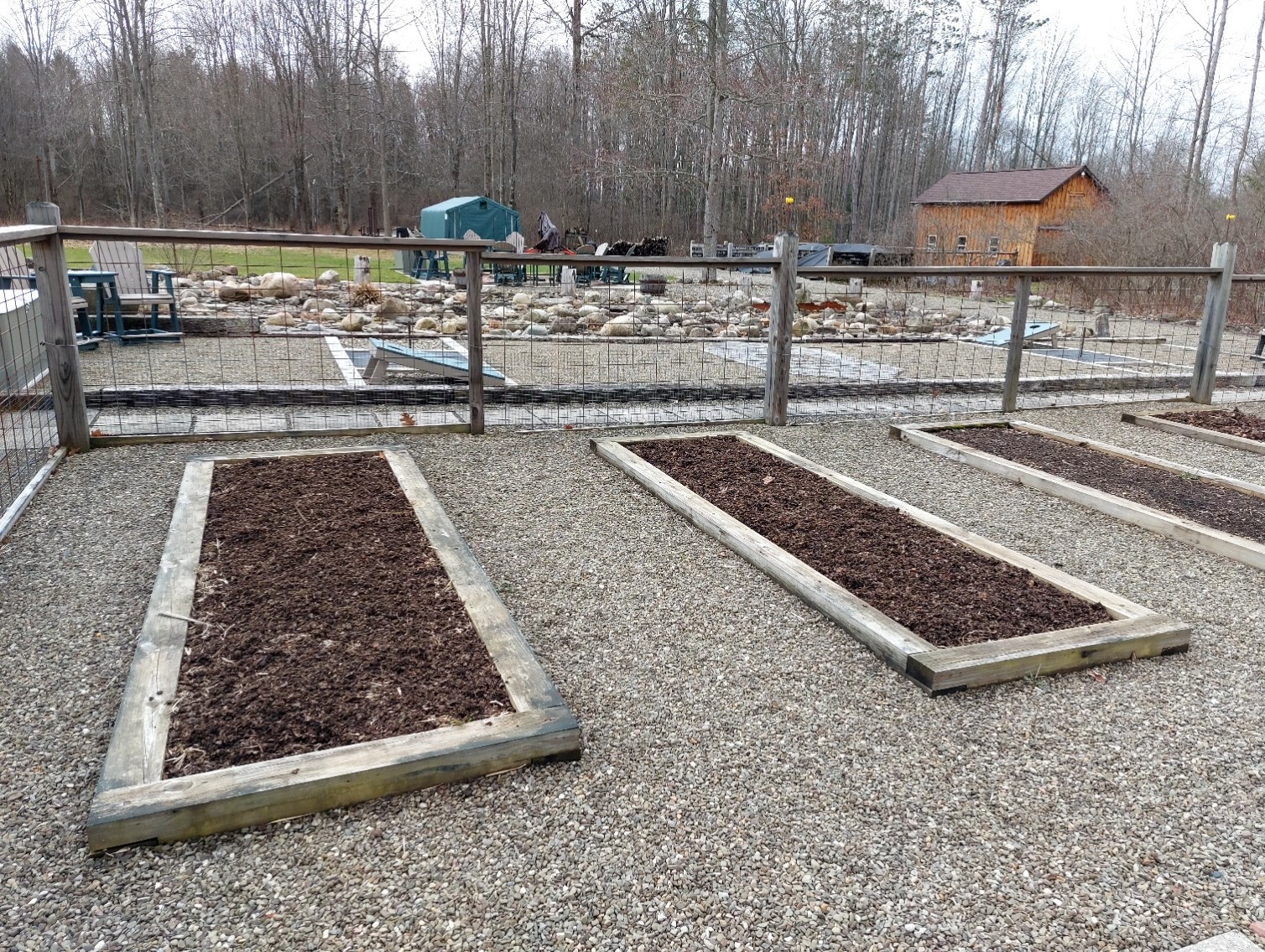
The raised beds need a little tidying up before planting.  This would be the time to test soil if I wanted to, but this year I am going to add a balanced organic fertilizer and top dress with compost.  I don't have any beds I am concerned about.  The bed above is clean and ready to plant and I will first be planting some butterhead lettuce under cover, then after the lettuce bolts I will plant the whole bed with a cover crop of buckwheat.  The birds have been sorting through the leaf mulch looking for insects.


These two beds (above and below) have old buckwheat stems from last fall.  I just chop and dropped it and since it was late in the season, the stems did not break down.  But they provided protection for the soil all winter.  Now I will lift the stems with a pitch fork and toss them into the new compost pile.


The beds below are covered with shredded cornstalks.  This is also slow to break down but I want to leave it where it is to suppress any weeds that may want to come up thru.  If I rake it it will make a mess, so I will just top dress with well sifted compost and plant my zinnia and cosmos seeds in that layer.


The strawberry plants are putting on growth and need their old leaves removed.


In fact, there are leaves to clean up in all of the corners.

Daffodils and Daylillies

We haven't set up the cold frame yet, but I have a couple of winter sowing projects already going.


The Sterlite tub contains a 1020 tray of lettuce mix and the milk jugs have Sahara Rudbeckia and Snapdragons.

The Snapdragons are up.  I see five teeny tiny plants

Indoors I have some early seedlings under lights

In the seed tray, bottom to top: Celosia, Coleus, Peppers,
tiny Mesclun mix and leftover butterhead.
In the cell pack: transplanted Tom Thumb mini Butterhead lettuce

The peppers are just getting their first true leaves and I will transplant those with the Celosia under a second light and when the lettuce gets set out I will have room to transplant the Coleus and start some tomatoes.

I'm ready for a warm, dry day to get going and in the next week or two I will be direct sowing peas, lettuce and carrots.