Monday, June 30, 2014

Linguine and Basil Pesto

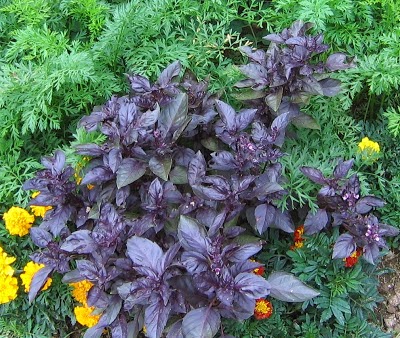
I use Red Rubin Basil for extra color in the garden.

Every year I grow about 4 Basil plants.  I don't use a lot of it and generally, by the end of summer, I have four huge Basil "shrubs".  So Saturday when I trimmed back the Basil I brought it in the house and made some Pesto.  I just ran the leaves through the food processor along with a drizzle of olive oil.  Then, because it was 9am, I pressed the pesto into a small container, drizzled a tablespoon of oil onto the top to preserve it and popped it in the fridge.

This evening, I saute'ed a couple of the last cloves of last year's garlic, added the pesto to the frying pan and then tossed in some linguine noodles.  I seasoned it with some sea salt and herbs and Oh My Lord!  That was good!  It's just screaming for some chopped cherry tomatoes.  I can't wait until I have some to add to it!


Tuesday, June 24, 2014

The Color of Things

Photos from my evening stroll through the garden just ahead of thunderstorm #2.


I am so impressed with the early performance of the Blue Beauty tomato plant. The fruit have more than doubled in size and it has half a dozen fruit set.  This plant was the second seed to germinate and has been a monster at every stage out pacing all my other seedlings of all varieties.  But, the Absinthe and Barlow Jap plants next to it are nearly caught up.


... but not all of the Blue Beauties are showing blue color.  This is all on one plant.


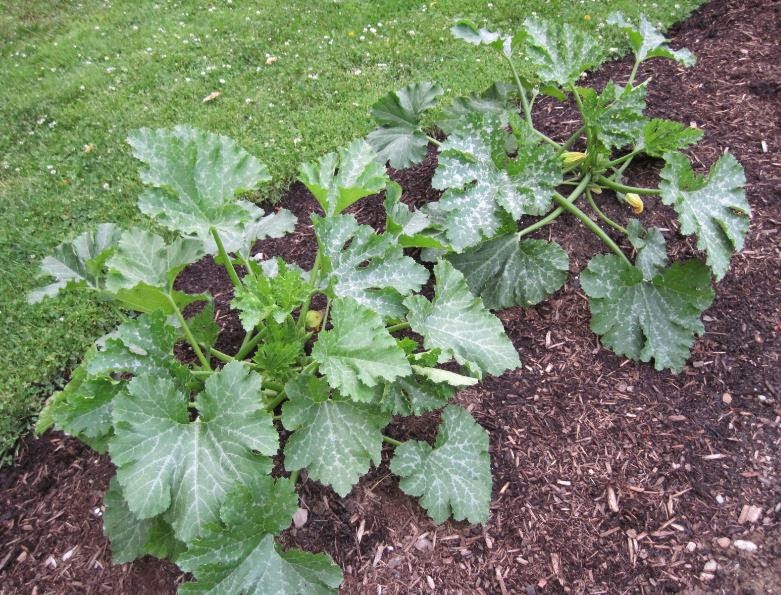
After last year's Epic Fail in the squash department I am really enjoying these healthy Dunja zucchini plants.  And you can be sure I am checking every day for signs of stink bugs.  I have killed a handful of various stink bugs but have only seen one wicked Horned Squash Bug.  At least I think that was what it was.  It was on the wing just outside the back door.


My melons are growing well.  The Cantaloupe in the front are covered in blossoms.  The Moon and Stars watermelons in the back are growing well but have yet to bloom.


Now here's an interesting photo.  This is Black Bean Bed #2.  It has a row of transplanted Marketmore cucumbers along the right side.  Since cukes are a big deal around here and I should be making pickles this year, I worked some Blood Meal to the right edge of the bed before transplanting the cukes.  Now you can see to the left side I'm dealing with some Fusarium Root Rot.  And the beans in the middle have out run the Fusarium but are not really thriving, but the beans along the area where I put blood meal are dark, lush and unaffected.  As are the cucumbers.  I had a little trouble with Fusarium last year in one bed which this year seems totally fine and is growing a bumper crop of lettuce and peas.  Blood Meal is a quick organic source of Nitrogen and you can bet I will be using more of it in the future.

Saturday, June 21, 2014

This Week's Firsts


This week the first tomato fruit set.  The Blue Beauty.  I'm pleased that it is already displaying its unique blue-black coloring.  This week I also picked my first peas, found my first Cucumber Beetles and noticed my first female cantaloupe blossoms.


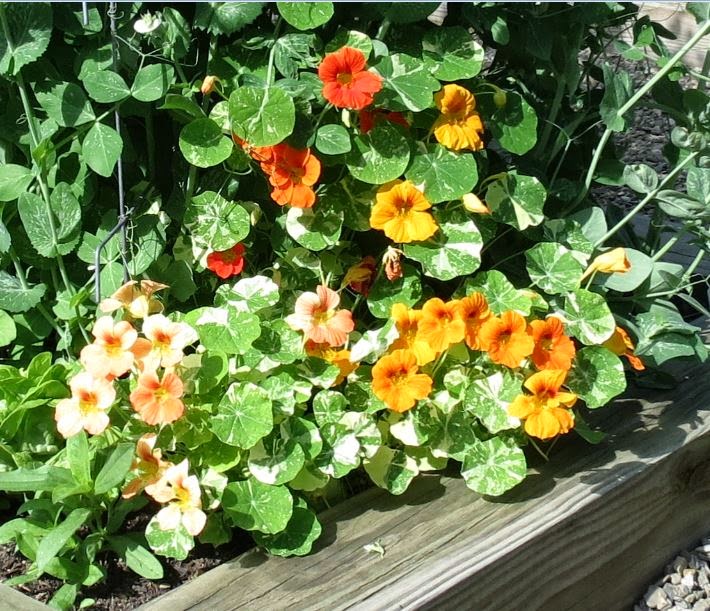
I am really enjoying the Nasturtiums this year.  They took right off and I have a nice range of brilliant colors.  Last year they didn't amount to much, in fact they haven't been this nice since 2010.  I plant them just to add color to the garden but the leaves add a nice peppery flavor to salads and the flowers make a nice edible garnish.  They are also said to repel squash bugs and serve as a catch crop for aphids.


Thursday, June 19, 2014

Past Projects Update

For Throwback Thursday I think it's time for a Past Projects Update.

First is the Rain Barrel.  We have this garage downspout routed into a salvaged barrel with a refurbished oil barrel hand pump.  We use this to fill the watering can to water the landscaping on the far side of our property.  But this downspout with it's huge roof footage is under utilized. Tim had dreams of stockpiling water so if our main reclaimed water tank runs out we can refill it with more captured rain water.


My company was discarding this used water tank which needed a new lid and fitting, both available at Tractor Supply, so for $20 in replacement parts we tripled our water storage.  Tim put a pipe which takes the over flow off the top of the 55 gal drum and forces it over to the second tank through sheer hydraulic pressure.  Half an inch of rain more than fills these tanks.  Now if the big tank runs out, Tim can pick the tank up with the tractor and gravity feed the water into the underground tank that runs the garden hose.

Another successful project is  The Tree We Planted Twice.  This little London Plane Tree was one of three we planted two years ago.  The other two didn't take off and the Nursery replaced them with bigger better trees.  This one looked like the roots were going to rally so we re-planted it nearby.


The little tree has taken off and is beautifully shaped and growing fast.  Soon it will be nearly caught up to the larger Plane trees.


Speaking of trees... we cut an awful lot of them around here.  I lost count around 220.


This massive Larch tree (messy old thing) was part of the tree clearing for Tim's new garage.  It was on the edge of our front yard and it was much more picturesque after it was cut than before.  One thing we try to do when we're murdering large trees on a grand scale is try to put them to good use.  The hemlock logs were given away to be used in building a barn.  The Red Oak and Larch we are using here.  Larch is similar to Cedar.  Tim had it milled into wainscot.


This week it has finally made it to it's final destination.  Tim is using it for the ceiling of his garage.


We have a "thing" for bead board ceilings around here.  This beautiful Larch is making quite a dramatic effect.  A good use for a beautiful old tree.
Sunday, June 15, 2014

Good Bug, Bad Bug

So much of gardening is about bugs.  I spend a lot of time killing bad ones and a lot of time writing about it!  But I don't kill all bugs. I was thinking today at what a busy buggy garden I have.  There are a lot of dragon flies, lightening bugs, lady beetles, various and sundry flies and bees.  It's a pretty active place.  And you have to know your bugs.  Reader MatthewB recently commented about how the earwigs left off eating the cilantro and went to eating the aphids.  Perfect!  That's what we want.  Good bugs eating Bad bugs.

Asparagus Beetles are narrow and start off orange, darkening as they mature

So... know your bugs.  This morning I found a Lady Bug hanging out in the asparagus.  She came really close to being exterminated with the Asparagus Beetles.  In fact, I had her stuck before I went "wait, that's too round for an Asparagus Beetle!" and carefully picked her off.


Lady Beetles come in many patterns but are very round and hard shelled.
If you want a garden eco system balanced in your favor you need more good bugs than bad bugs.  Good bugs eat the bad ones and pollinate your flowers.  You have to know what you're doing when you start killing things.  Mac's Field Guide comes in handy.

Mac's Field Guide Good Bugs and Bad Bugs of the Northeast

You can get these on Amazon.  They are available by geographical area and are laminated with a little hole for hanging in the garden shed.  You just compare your bug to the pictures.  If there is any doubt, take you clues and go to BugGuide.net for confirmation.  There you can get lots of photos of Asparagus Beetles or Lady Bugs.  Then you can go to Gardeninsects.com  and figure out who eats who.

If that doesn't solve it, you can start Googleing other gardener's solutions for your bad bug.  There are some really clever people out there.  I will forever be grateful to Quinn from the Reformation Acres Blog for the Duct Tape solution to squash bugs (and flea beetles, cucumber beetles and asparagus beetles).  She turned me into a Bad Bug Killing Machine!

Saturday, June 14, 2014

Coincidence or Environmental Influence?


The first bloom on each of my tomato plants is a double bloom which will result in a fused fruit.  I rarely get a double bloom but now I have plenty.  The secondary blooms are all singles.

The Absinthe Plant

Blue Beauty

Barlow Jap

This is what I mean by a fused fruit.
June is a peaceful time in a vegetable garden.  All the hard work has been done.  The weather is still fairly mild and the plants are lush and full of promise.  The insect either haven't arrived yet or haven't had enough time to do catastrophic damage.   None of the big harvests are breathing down your neck demanding to be picked, cooked, shared or preserved.  June is the deep breath before the plunge.

The potatoes have never looked better.  Not a bit of blight or flea beetle damage.
They are just beginning to bloom.
The edge of the Black Bean Forest.

Over two weeks of vigorous thinning has not made much of a dent in the lush rows of leaf lettuce.
I've picked between 3 and 5 pounds each week.   Cool weather is helping to keep them from bolting early.

Last year my Burpee Iceberg lettuce never formed heads.
This Crispino head lettuce  from Johnny's seeds is just beginning to.


Tuesday, June 10, 2014

Early June Garden Update

It's amazing how fast Black Beans come up.  I planted this bed in two sections two days apart.  Sunday we got 2 inches of rain and the next day I had a little army of bean plants.  A row of Cucumbers runs down one edge.  Beans and cukes do well together in this bed.  I have just started a flat of cucumbers which will be planted with bush beans when the lettuce bolts in a couple of weeks.

This bed of Black Beans is a week ahead of the other.  I have a row of Bush Beans down one side.

The peas are beginning to set pods and I love my neat row of Butter Head and Romaine lettuce.
The large bed is for picking.  This row is for admiring.

The vigorous Blue Beauty tomato plant is the first to bloom.  This double bloom will produce fused fruit.